The First and Only FDA-Authorized Treatment for Early to Intermediate Dry Age-Related Macular Degeneration
Red Light Therapy
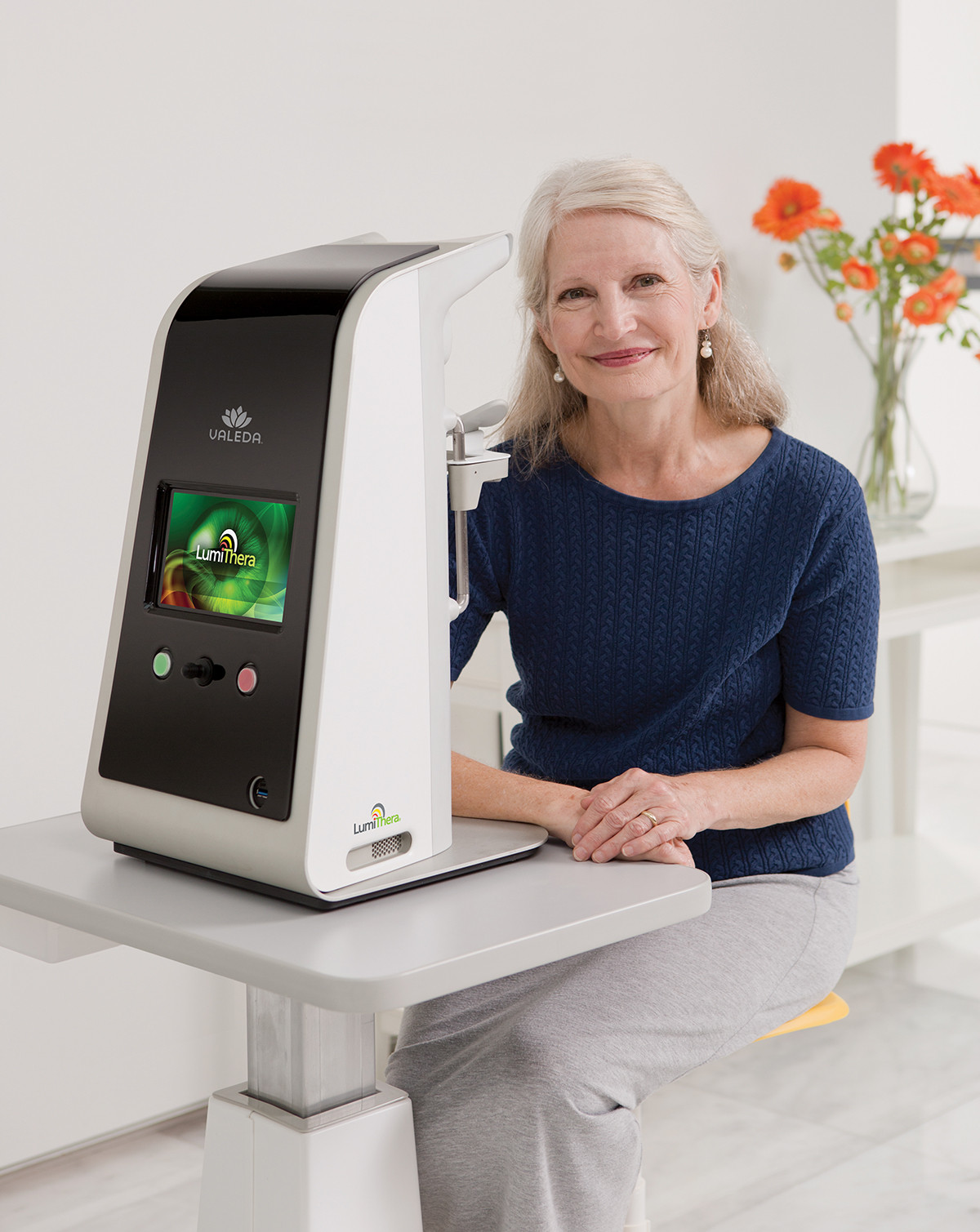
Red light therapy is now available at Retina Consultants of South Carolina – one of the few practices in the Southeast offering the first and only FDA-authorized treatment designed to slow the progression of dry age-related macular degeneration (AMD). This non-invasive red-light therapy known as, Valeda Red Light Therapy, is administered through the Valeda® Light Delivery System. The goal of this treatment is to stabilize vision and decrease the risk of further vision loss.
About Age-Related Macular Degeneration
AMD is a leading cause of vision loss in older adults. It occurs when cells in the macula, the central part of the retina, begin to deteriorate, typically due to aging. As the condition progresses, individuals may experience visual distortions, blurred central vision, trouble adjusting to changes in light, and difficulty reading or performing tasks that require close focus, such as driving or recognizing faces.
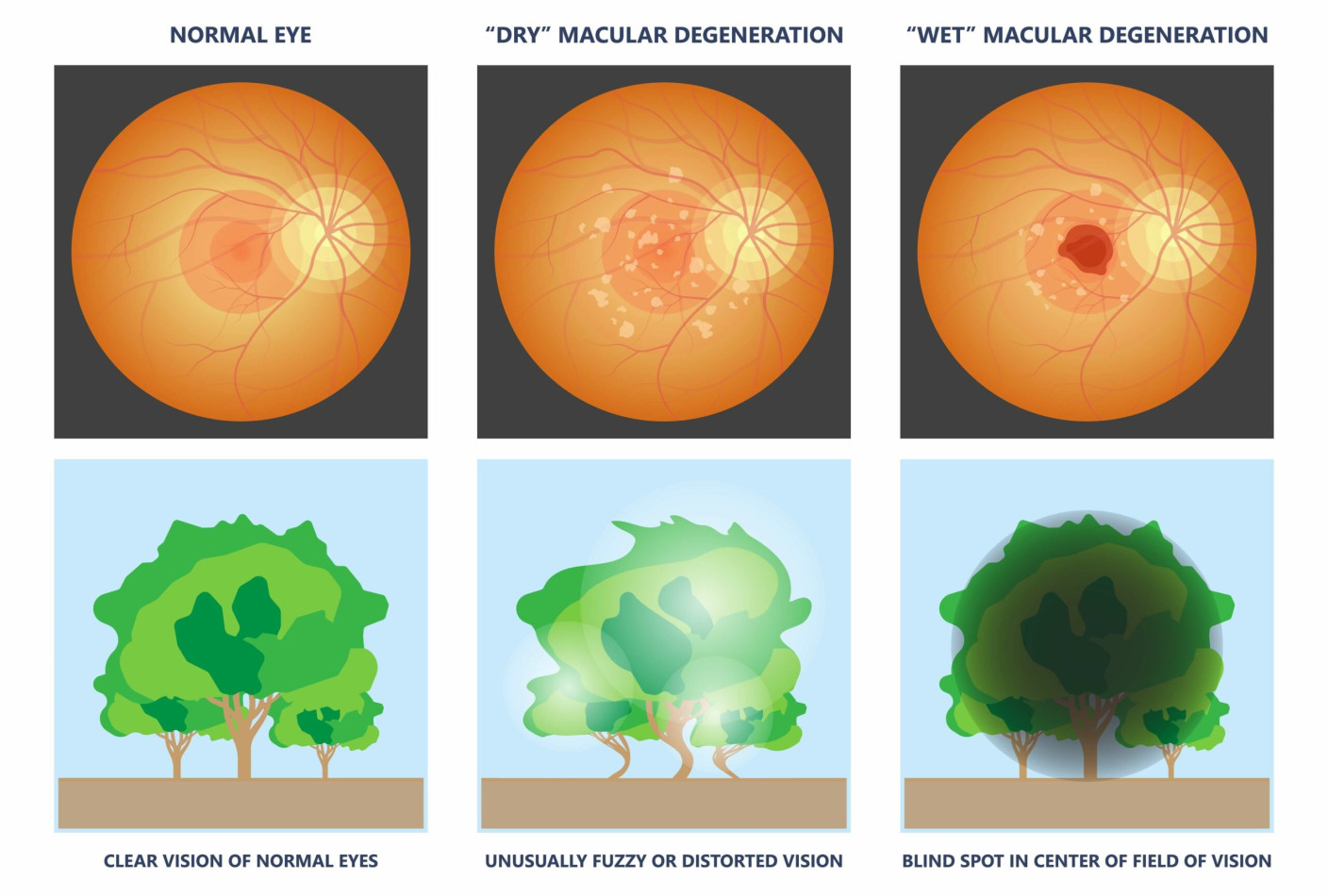
There are two types of AMD: dry and wet. Dry AMD is the most common form of the disease and consists of three stages: early, intermediate, and advanced.
AMD Stage 1 - Early
Individuals may not notice significant symptoms in this early stage of AMD, but subtle macular changes begin to occur. Tiny yellow or white spots known as drusen can form in the retina, indicating the onset of the condition. Drusen aren't visible to the naked eye and are typically detected during a comprehensive eye exam.
AMD Stage 2 - Intermediate
At this stage, individuals may start noticing visual changes, such as blurred central vision and difficulty seeing in low light. Drusen start to increase in size and number, indicating disease progression.
AMD Stage 3 - Advanced
As AMD progresses to an advanced stage, individuals may experience significant vision loss. They are also at an increased risk of developing wet AMD, which is characterized by the growth of abnormal blood vessels and can result in rapid vision deterioration. An advanced form of dry AMD, known as geographic atrophy (GA), may also develop, leading to progressive retinal degeneration.
How the Treatment Works
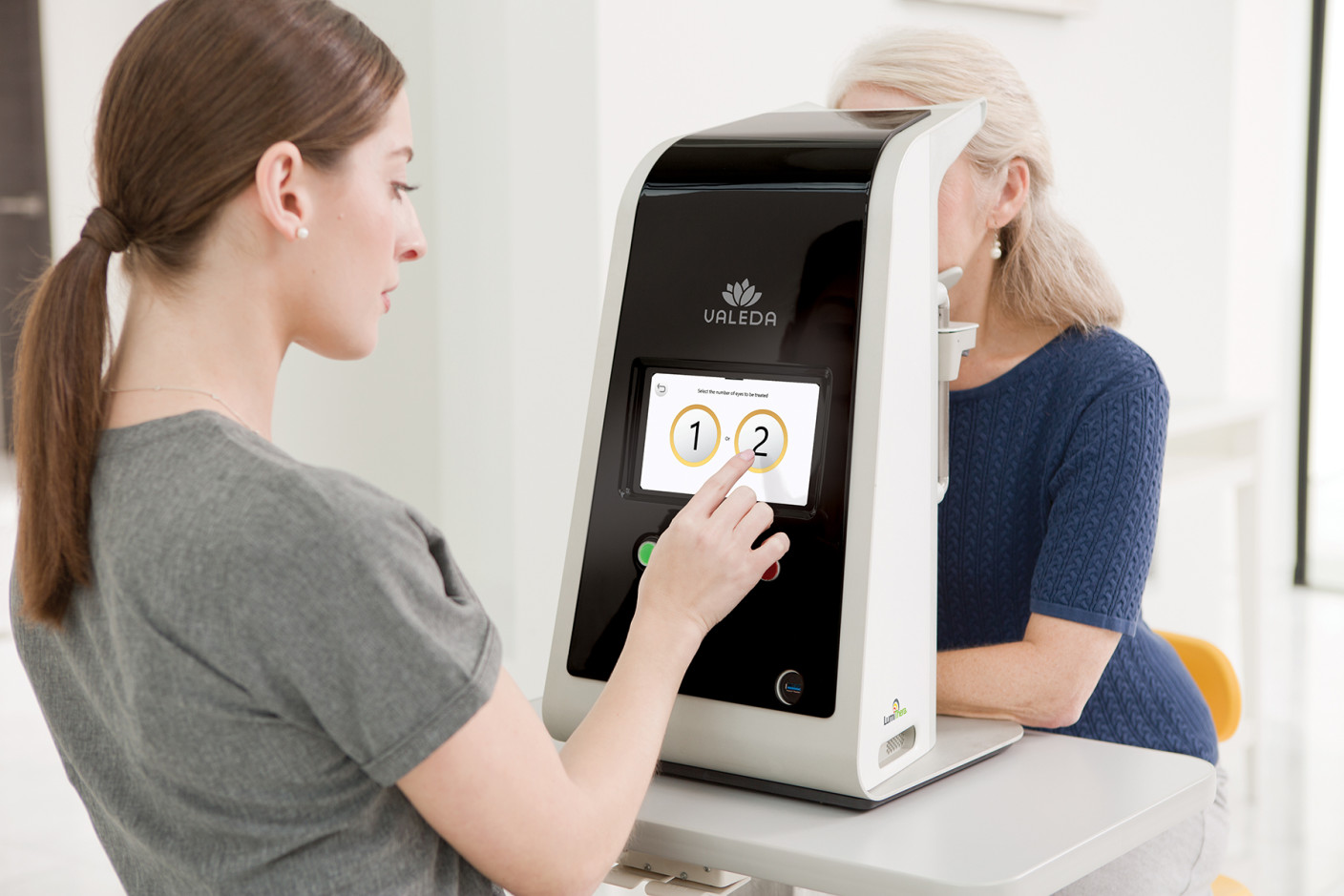
Valeda® Light Delivery System stimulates eye cells that have begun to lose their functionality by administering targeted wavelengths of light therapy. This innovative approach is believed to operate through several mechanisms:
- Improving blood circulation to the retina and its supporting tissues.
- Stimulating nitric oxide production, which is essential for the health of blood vessels.
- Activating mitochondria, the cell components responsible for energy production.
Valeda® is the first device specifically created for the treatment of Dry AMD.
What to Expect
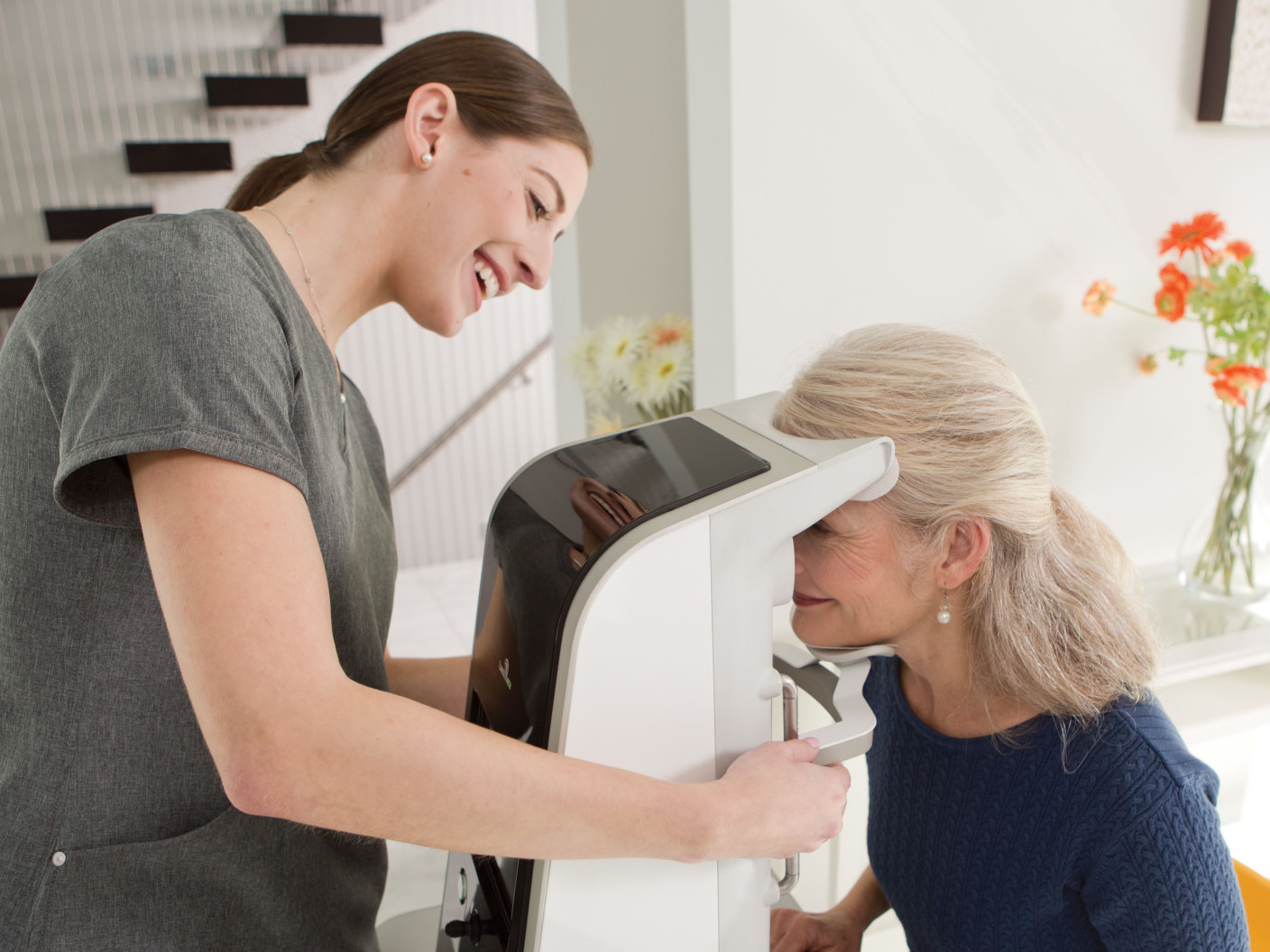
Valeda® treatments are quick, painless, non-invasive, and performed in-office. There are no special preparations required, and no eye drops, needles, or medications involved.
A complete treatment round consists of nine sessions, with three treatments per week over three weeks. Each session lasts just a few minutes and utilizes three different wavelengths of light. You can expect to undergo treatment rounds every four to six months based on your personalized treatment plan.
Patients report that Valeda® treatments do not cause discomfort or side effects, allowing them to resume normal activities immediately after the sessions. It's normal to notice an afterimage following the treatment, but this effect usually fades within a few minutes.
The Clinical Research Behind Red-Light Therapy
The LIGHTSITE I, II, and III trials were multi-center clinical studies conducted at leading retinal centers across the country. Their purpose was to evaluate the safety and effectiveness of the Valeda® Light Delivery System in individuals diagnosed with early to intermediate dry AMD.
The LIGHTSITE Phase III trial lasted for 24 months and involved 148 eyes from 100 participants. These participants received either the Valeda® PBM treatment or a placebo (sham) treatment, administered three times a week for several weeks. At the 13-month evaluation, approximately 55% of patients in the PBM group showed an improvement of at least five letters on the eye chart, and this level of improvement was maintained at the 24-month follow-up. In contrast, the placebo group showed minimal improvement.
Additionally, patients treated with PBM during the trial showed stabilization of drusen, while those in the placebo group showed increased buildup.
Participants in the PBM trial also showed a reduced risk of progressing to wet AMD or GA, both of which can lead to permanent vision loss. By delaying or preventing advancement to these severe stages, patients can preserve their vision for longer.
For a closer look at the science behind Valeda®, visit the website.
Safety
The Valeda® Light Delivery System is generally recognized as a safe and effective treatment option with minimal side effects. Some individuals may experience mild discomfort, eye strain, irritation, or temporary changes in vision during or after the procedure. However, these occurrences are rare and usually resolve quickly. Research shows that there is no harm to the eye or its photoreceptors.
Ongoing clinical trials continue to investigate its effectiveness, but current evidence suggests that Valeda PBM is a powerful, low-risk treatment for patients with dry AMD.
Contradictions
Patients with known sensitivity to yellow or red light, near-infrared radiation, or a history of light-triggered central nervous system disorders (such as seizures, epilepsy, or migraines) should not undergo treatment with Valeda®.
Additionally, patients should avoid PBM therapy for 30 days after using topical or injectable photosensitizing agents affected by light wavelengths of 590, 660, or 850 nm, unless they have consulted a physician at Retina Consultants of South Carolina.
Request an Appointment with Retina Consultants of South Carolina
If you have been clinically diagnosed with dry AMD, we encourage you to schedule a consultation for Red Light Therapy at our Bluffton, Myrtle Beach, Mt. Pleasant, or West Ashley location.
Please call us at (843) 763-4466, or text us securely at (843) 897-2963.
For quick and convenient communication, you can also message our team through Klara by clicking the purple "Message Us" button at the bottom right of your screen.